What Is Digital Marketing? Meaning, Types, and Benefits
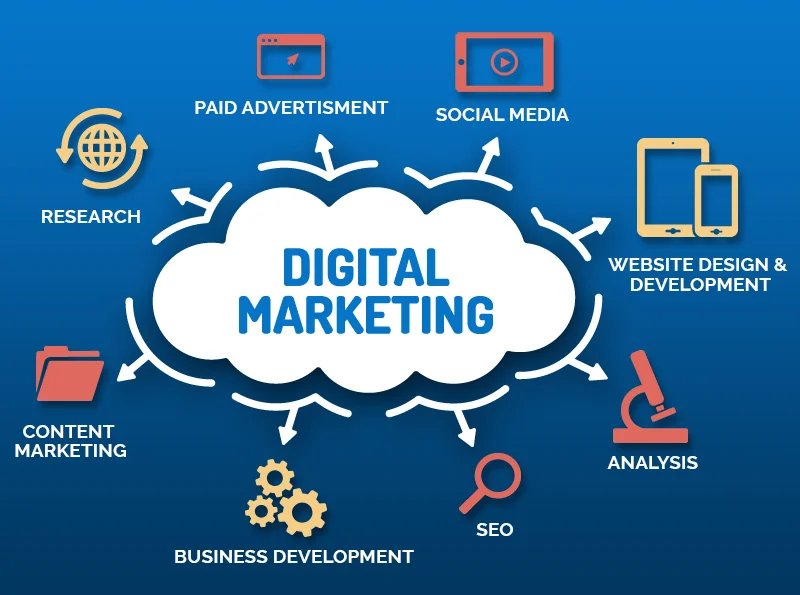
Digital marketing helps businesses promote their products and services online. It connects brands with potential customers through search engines, social media, websites, and email.
What Does Digital Marketing Mean?
Digital marketing meaning refers to promoting products, services, or brands using digital channels. Businesses use these platforms to attract customers, increase brand awareness, and generate sales.
The main objectives of digital marketing include:
Reaching potential customers online.
Increasing website traffic and brand awareness.
Generating quality leads.
Promoting products and services.
Building customer relationships.
Measuring marketing performance.
Why Is Digital Marketing Important?
Digital marketing helps businesses reach their target audience and compete in the online marketplace.
Key benefits include:
Wider Reach: Connect with customers across different locations.
Cost Control: Manage advertising budgets according to business goals.
Targeted Advertising: Reach audiences based on interests and location.
Measurable Results: Track website traffic, clicks, and conversions.
Better Engagement: Communicate with customers through online platforms.
Business Growth: Generate inquiries and sales opportunities.
What Are the Main Types of Digital Marketing?
Different digital marketing methods help businesses achieve specific marketing goals.
1. Search Engine Optimization (SEO)
SEO improves website visibility in organic search results and attracts users searching for relevant products or services.
Important SEO activities include:
Keyword research.
On-page SEO.
Technical SEO.
Local SEO.
Link building.
2. Social Media Marketing
Social media marketing promotes businesses through platforms such as Facebook, Instagram, LinkedIn, and YouTube.
Its benefits include:
Building brand awareness.
Sharing engaging content.
Connecting with customers.
Increasing website traffic.
Generating leads.
3. Pay-Per-Click Advertising (PPC)
PPC advertising displays paid advertisements on search engines and other digital platforms. Advertisers generally pay when users click their ads.
Common PPC activities include Google Ads campaigns, display advertising, remarketing, and conversion tracking.
4. Content Marketing
Content marketing attracts audiences through helpful and relevant information.
Common content formats include:
Blog posts.
Website content.
Videos and infographics.
Case studies.
Educational guides.
5. Email Marketing
Email marketing helps businesses communicate directly with subscribers and existing customers.
Businesses use it to share offers, promote services, send newsletters, and encourage repeat purchases.
6. Affiliate Marketing
Affiliate marketing allows individuals or businesses to promote another company’s products for a commission on qualifying sales or actions.
7. Influencer Marketing
Influencer marketing involves collaborating with content creators to promote products, services, and brands through their established audiences.
8. Local Digital Marketing
Local digital marketing helps businesses attract customers within specific geographic areas.
Important activities include optimizing Google Business Profile, improving local search visibility, managing reviews, and creating location-specific content.
How Does Digital Marketing Work?
Digital marketing follows a structured process to attract potential customers and achieve business objectives.
Research: Understand your audience and competitors.
Planning: Set goals and choose suitable marketing channels.
Content Creation: Develop relevant content and advertisements.
Promotion: Publish content and run campaigns.
Measurement: Track traffic, leads, and conversions.
Optimization: Improve performance using collected data.
What Is the Difference Between Traditional Marketing and Digital Marketing?
Both approaches promote products and services, but their channels differ.
Traditional Marketing: Uses newspapers, television, radio, and printed advertisements.
Digital Marketing: Uses websites, search engines, social media, email, and online advertisements.
Targeting: Digital platforms often provide more detailed audience targeting.
Tracking: Digital campaigns offer measurable performance data.
Engagement: Online platforms support interactive communication.
How Can Small Businesses Start Digital Marketing?
Small businesses can begin with a clear strategy and a manageable budget.
Identify your target audience.
Create a professional website.
Research relevant keywords.
Optimize your website for SEO.
Set up a Google Business Profile if eligible.
Share useful social media content.
Test paid advertising when appropriate.
Track leads and conversions.
Choose channels that match your audience and increase your business goals.
Learn a course with MMG
What Is the Future of Digital Marketing?
Digital marketing continues to evolve with changing technology and customer behavior.
Important developments include:
Artificial Intelligence: Supports research, analysis, and personalization.
Video Marketing: Helps businesses communicate visually.
Voice Search: Encourages natural-language content.
Personalization: Creates more relevant customer experiences.
Data Analytics: Helps marketers make informed decisions.
Businesses should focus on useful content, customer experience, and trustworthy communication.
Conclusion
Digital marketing helps businesses improve online visibility, reach potential customers, and generate sales opportunities. SEO, social media, PPC, content marketing, and email marketing are important components of an effective strategy.
Understanding Digital Marketing Meaning helps businesses select suitable methods for their goals. Start with a clear plan, understand your audience, and measure results regularly.
Frequently Asked Questions About Digital Marketing
1. What is digital marketing in simple words?
Digital marketing means promoting products and services through online channels such as websites, search engines, social media, and email.
2. What is the meaning of digital marketing?
Digital marketing meaning refers to using digital platforms and technologies to promote brands, attract customers, and achieve business goals.
3. What are the main types of digital marketing?
The main types include SEO, social media marketing, PPC advertising, content marketing, email marketing, affiliate marketing, and influencer marketing.
4. Is Digital Marketing useful for small businesses?
Yes. It helps small businesses improve visibility, reach relevant customers, generate inquiries, and track performance.
5. Is SEO part of digital marketing?
Yes. SEO is a major digital marketing method that improves organic search visibility.
6. How long does digital marketing take to show results?
Results depend on the channel, competition, budget, and strategy. Paid advertising can generate traffic quickly, while SEO usually requires consistent effort.
Hi, this is a comment.
To get started with moderating, editing, and deleting comments, please visit the Comments screen in the dashboard.
Commenter avatars come from Gravatar.
Pingback: Increase Your Business with Digital Marketing - digitaldemands.in